
Nitro coffee looks like a glass of stout and drinks like something between a smoothie and a soda. The dark liquid settles under a thick, tan head of foam, and the first sip arrives cold, creamy, and faintly sweet even though nothing sweet was added. That combination is why the drink moved from a handful of specialty bars to grocery coolers and chain menus in less than a decade.
Underneath the theatrics, the recipe is simple. Nitro coffee is cold brew that has been charged with nitrogen gas, usually through a pressurized keg and a stout-style faucet. The gas does not change the flavor of the coffee itself. It changes how the coffee feels and how your palate reads it, which turns out to matter a great deal.
What Nitro Coffee Actually Is
Start with cold brew. Coffee grounds steep in room-temperature or colder water for roughly 12 to 24 hours, then the liquid is strained off. Because no heat is involved, the resulting brew is less acidic and often smoother than drip coffee, and it is typically stronger because it is made with a higher ratio of grounds to water.

That cold brew, or a diluted version of it, goes into a keg. Nitrogen gas is forced in under pressure, and when the coffee is poured through a restrictor plate in the faucet, the dissolved gas comes out of solution as thousands of tiny bubbles. Those bubbles are smaller than the ones carbon dioxide produces in soda or sparkling water, so instead of prickly fizz, you get a dense, velvety foam.
The result tastes sweeter than the same cold brew served flat. Nitrogen does not add sugar, and it does not add flavor in any conventional sense. It is tasteless and odorless. What it does is alter the texture and the way aromatics reach your nose, and many drinkers interpret that creaminess as sweetness. It is the same trick that gives a properly poured stout its reputation for being richer than its ingredients suggest.

A Short and Disputed History
Nobody agrees on who poured the first nitro coffee. The most repeated version credits Mike McKim, founder of Cuvee Coffee in Austin, Texas, with developing the drink and introducing it around 2012, with Stumptown Coffee Roasters in Portland, Oregon, following soon after.
A competing account, reported by Esquire, gives the credit to The Queens Kickshaw, a New York coffee pub that began serving draft coffee in 2011. Both stories circulate widely, and the available evidence does not settle the question. What is not in dispute is the timeline that followed: canned nitro products reached shelves around 2014, and the drink spread quickly through specialty cafes.
How It Differs From Cold Brew and Iced Coffee
Cold brew and nitro coffee begin as the same liquid. The difference is everything that happens afterward. Plain cold brew is still. Nitro coffee is charged, foamy, and poured from a tap.

Iced coffee is a different starting point altogether. It is brewed hot, then chilled, which preserves some of the acidity and brightness that cold extraction leaves behind. Nitro is also distinct from a blended frappe, since it contains no ice and no dairy unless you add them.
Ordering a nitro latte is possible, but it is uncommon. Milk is difficult to clean out of draft lines, which is one practical reason most shops keep their nitro lines dairy-free and offer cold foam on top instead.
Caffeine Content Compared
Nitro cold brew tends to carry more caffeine per ounce than ordinary coffee. An eight-ounce cup of regular coffee contains roughly 65 milligrams. Because cold brew is made with a denser ratio of grounds to water, nitro can run at least 30 percent higher per ounce, which puts an eight-ounce serving near 90 milligrams.
Espresso works differently. A single shot is about one ounce and contains around 64 milligrams, roughly matching a standard cup of coffee. A double shot delivers about 120 milligrams in a much smaller volume. Exact figures shift with the beans and the brew ratio, but the general pattern holds: a poured nitro cold brew usually delivers more caffeine than a single serving of regular coffee or a single shot of espresso.
Is Nitro Coffee Healthier?
In some respects, yes. The creamy texture and perceived sweetness mean most people drink it black, with no sugar, syrup, or cream. Compared with sweetened bottled coffee drinks or energy beverages, that can mean a meaningful drop in calories and added sugar.
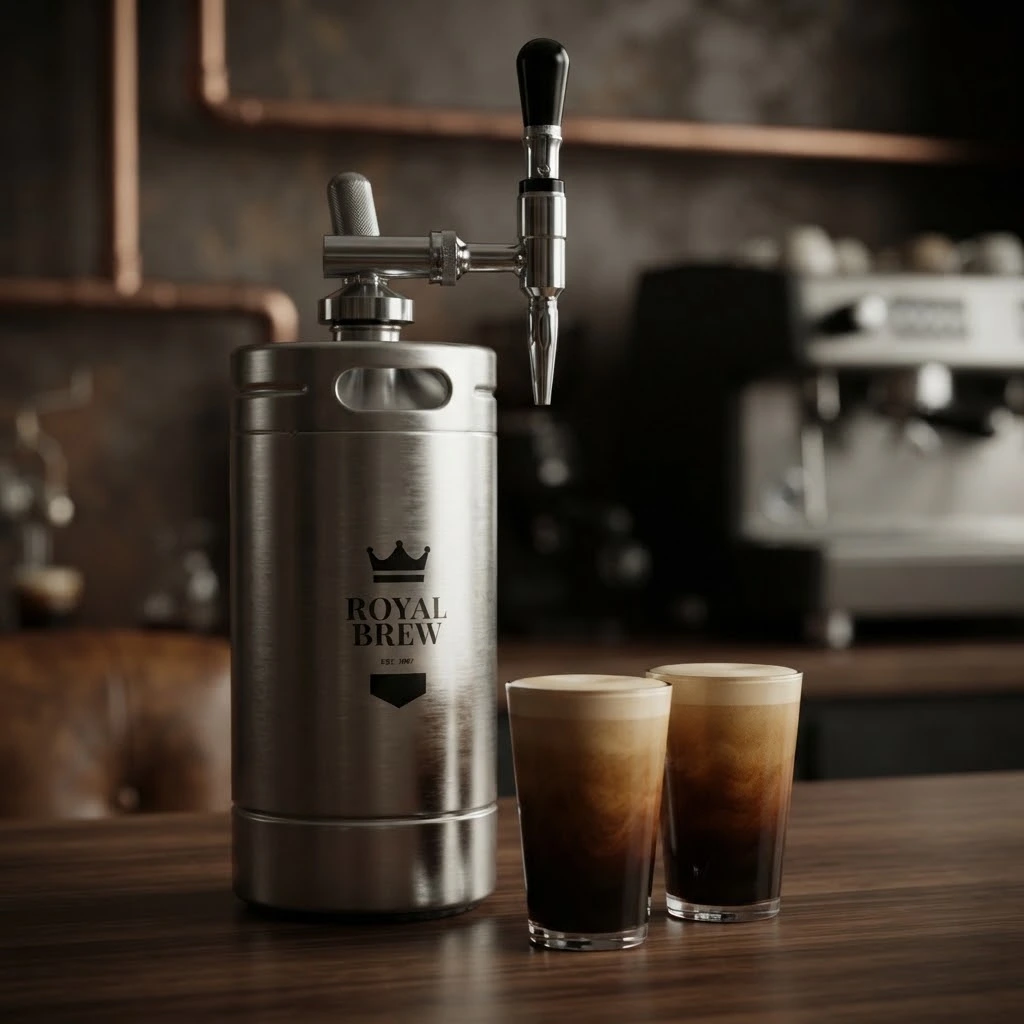
Cold extraction also produces a less acidic drink, which some people with sensitive stomachs find easier to tolerate than hot-brewed coffee. Canned nitro products frequently include nut milk blends, which add healthy fats and help hold the nitrogen in suspension.
There are trade-offs. The higher caffeine load is the main one, and it is significant for anyone who is pregnant, has a heart condition, or is sensitive to caffeine. The gas itself is not the concern; the concentration is. Cold brew also contains less chlorogenic acid than hot-brewed coffee, since that compound is extracted more efficiently with heat.
Why It Is Served on Tap
Nitrogen does not stay dissolved in liquid as readily as carbon dioxide, so keeping the drink charged requires sustained pressure. A keg and a gas line provide that. Pouring from a tap also agitates the coffee at the moment of serving, which is what produces the cascading foam and the fine bubble structure that defines the drink.
That equipment requirement is the reason home nitro coffee is harder than home cold brew. You can make the cold brew in any refrigerator. Making it nitro means buying a dispensing system.
Making Nitro Coffee at Home
The process starts like any cold brew. Combine coffee grounds and filtered water in a container small enough to fit in your refrigerator, stir gently, cover, and steep for 12 to 24 hours. Strain the mixture through cheesecloth or a fine mesh filter, then pour the concentrate into a nitro dispenser and charge it with nitrogen according to the manufacturer's instructions. A few shakes, and it is ready to pour.
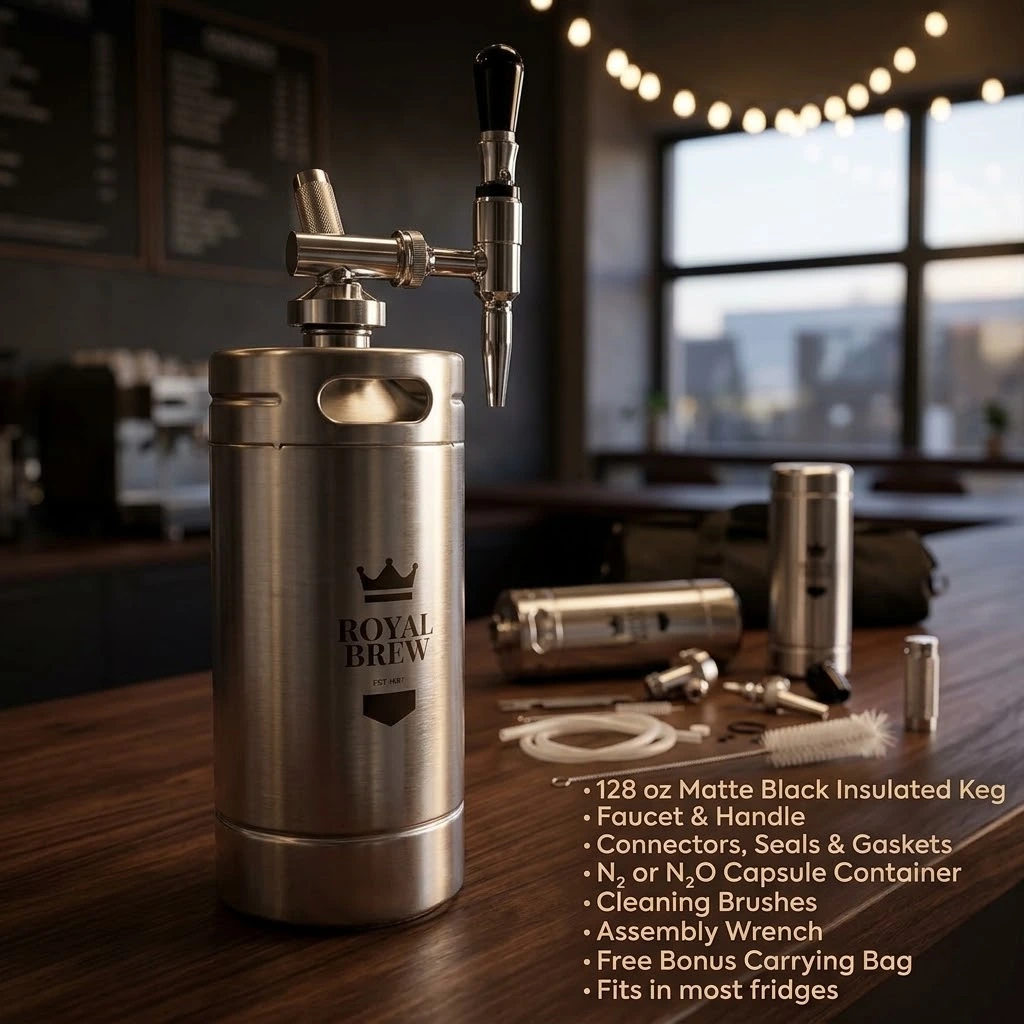
Two styles of home equipment dominate. Mini keg systems, such as the Royal Brew setup, use a stout beer faucet and a gas blend to produce smooth, creamy coffee on demand. They require nitrogen capsules, which are a recurring cost. Single-glass systems, such as the NitroBrew maker, charge up to about 12 ounces of cold brew at a time and pull nitrogen from the air through a compressor, so no cartridges are needed. The trade-off is cleanup for every glass.
How to Drink It
Skip the ice. Cubes and chips break up the foam and dilute a drink that is already best served cold, so chill the cold brew and the keg thoroughly beforehand instead. If you want more sweetness than the nitrogen provides, vanilla syrup and sweet cream are the common additions.
Some shops push further. Mighty Brew Bros. in Manhattan has served a Nitro Pop garnished with a coffee popsicle and a Nitro Float built with vanilla ice cream. A half-and-half blend of cold brew and stout or porter, charged in the same keg, is another option for drinkers who like the beer comparison the drink invites. Nitro coffee contains no alcohol on its own, despite the kegs and the resemblance to a pint.
Who Sells It
Canned nitro is now widely available in grocery stores and convenience stores, and most specialty coffee shops carry a draft version. Starbucks offers nitro cold brew topped with its signature cold foam, though the chain has limited the drink to Tall and Grande sizes. A Grande Nitro contains about 8 ounces of cold brew, compared with roughly 4 ounces in a standard Venti cold brew, and the company has cited the difficulty of getting a proper cascade in the larger cup. Whatever the reason, the Venti option has not been made available.
Because nitro depends on method rather than bean variety, almost any shop with the right equipment can serve it, and most use their own house beans or blends. That means the drink you get at one cafe can taste noticeably different from the one across town, even though the technique is identical.